
Santa Emilia · Mondoñedo, Galicia
Corporate Retreat Venue: a two-day rhythm for clear decisions in northern Spain
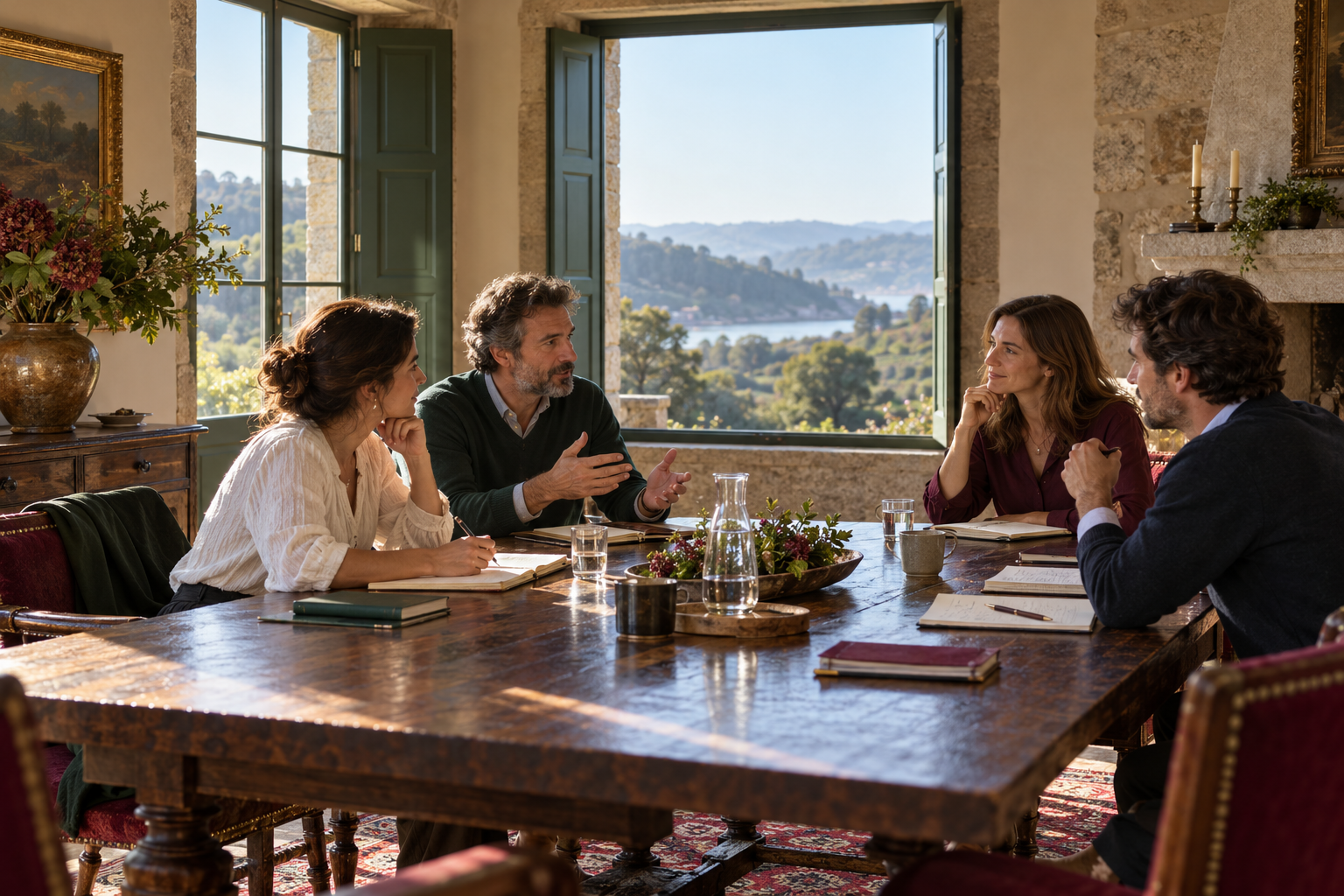
A corporate retreat venue should do more than provide a meeting room. For a useful two-day retreat, the working space, meals, overnight stay and quieter pauses need to form one coherent rhythm, so the team can move from diagnosis to decisions without repeatedly breaking concentration.
Santa Emilia is a 1924 historic house in Mondoñedo, Galicia. Its event rooms, garden and boutique accommodation make it possible to keep that rhythm in one place: arrive and align on day one, reflect overnight, then return to the table for decisions and ownership on day two.
Name the decision the retreat must unlock before designing the agenda.
Use the overnight pause as part of the thinking process, not empty time.
Reduce transfers between work, meals, conversation and rest.
Close with decisions, responsibilities and a first review date.
Why a two-day retreat needs a different kind of venue
A conference can succeed through efficient logistics: everyone arrives, receives the information and leaves. A retreat has a different job. It creates enough distance from normal routines for a small group to examine a problem, hear one another properly and commit to a course of action.
That difference changes the venue brief. The team needs a primary room that can support serious work, but it also needs places where the conversation can breathe. Meals should not feel like a separate production. The evening should allow informal exchange without becoming another scheduled session. Accommodation should make the next morning easy.
| One-day event | Two-day retreat |
|---|---|
| Optimises for content delivery and punctual movement. | Optimises for a decision sequence and sustained attention. |
| Breaks mainly serve refreshment and circulation. | Pauses give people time to test, revise and deepen ideas. |
| The final session often carries the whole conclusion. | Overnight reflection can improve the quality of the closing session. |
| Accommodation is optional logistics. | Accommodation protects continuity and avoids a second arrival. |
The overnight stay is not a gap in the agenda. It is the bridge between first reactions and better decisions.
A practical two-day rhythm
The exact agenda will depend on the decision and the team, but the order matters. Begin with shared context, move into disagreement while energy is high, and leave synthesis for after people have had time to reflect.
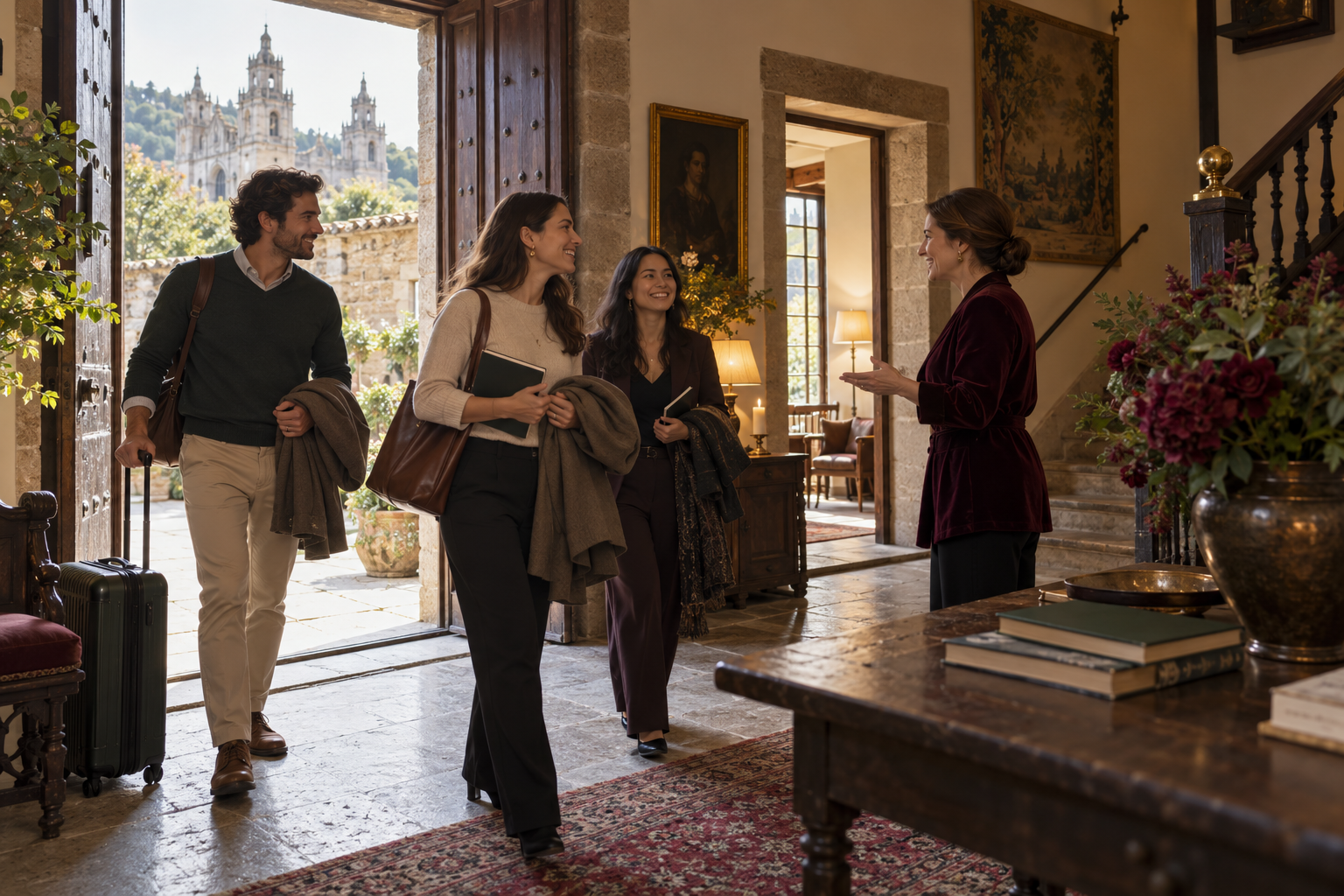
Gather without launching immediately into presentations. Use lunch to establish why the group is here and what will count as a useful result.
Review the facts, surface competing interpretations and record questions that need a decision. Protect this block from routine updates that could have been shared in advance.
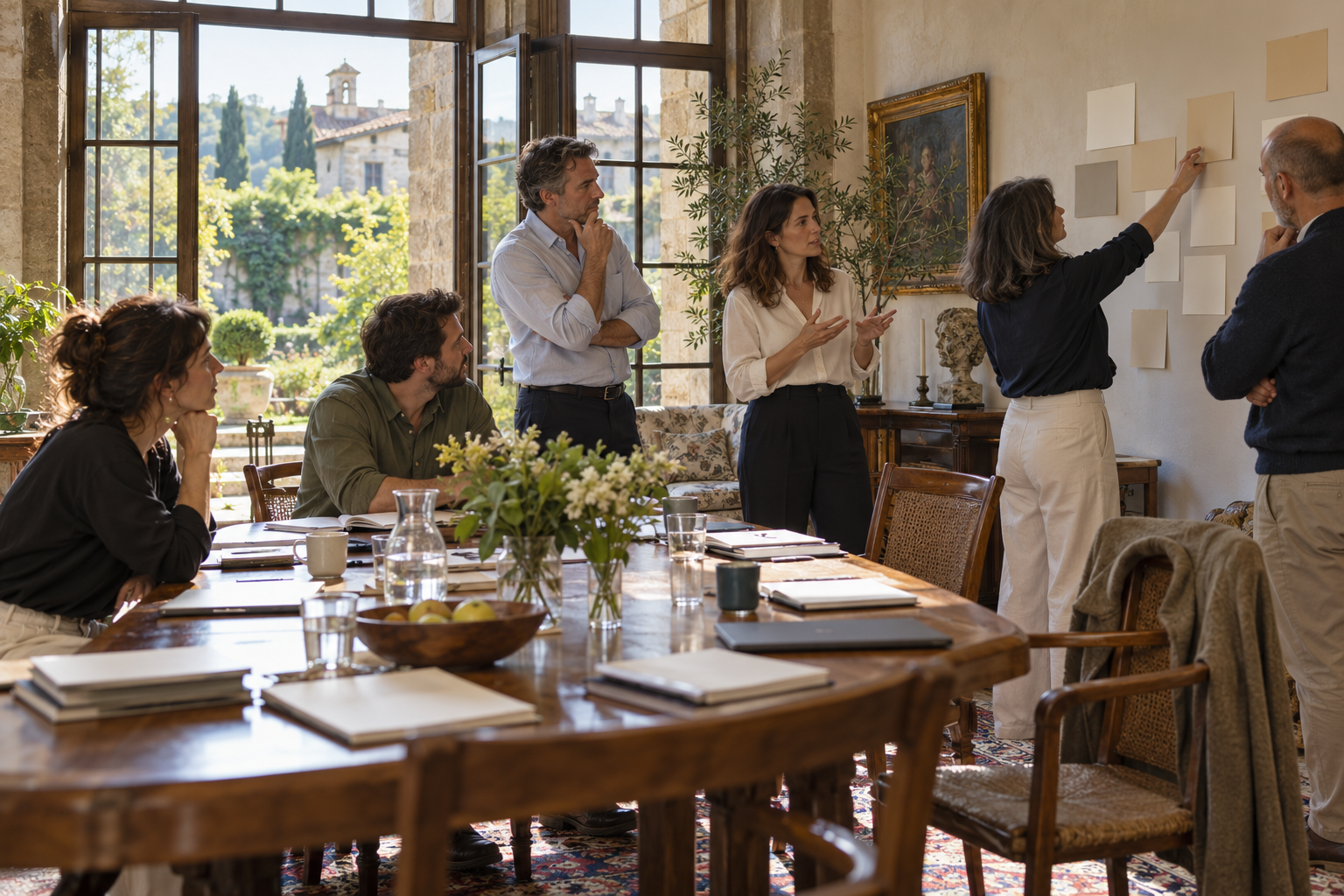
Form a small set of credible choices. A walk or change of room can help the group leave presentation mode and compare those options more openly.
Do not disguise another workshop as dinner. Let the team notice what remains unresolved and allow informal connections to develop.
Begin with what changed overnight. Choose a direction, state the trade-offs and record what the group is deliberately not doing.
Assign owners, deadlines and the first review point. Finish with a concise written readback before departure.
What a historic house contributes
A distinctive setting is valuable when it changes behaviour in a useful way. Moving away from the office can interrupt familiar hierarchies and habits. A smaller historic property also creates a different scale from a conventional conference hotel: working, eating, walking and staying can feel connected rather than distributed across a large complex.
Santa Emilia’s official venue page describes the Salón de los Pilares, other reception rooms, the historic garden and accommodation inside the house. Together, they offer a framework for a retreat that alternates concentrated work with quieter transitions. The aim is not to fill every room; it is to choose the few spaces that support the agenda.
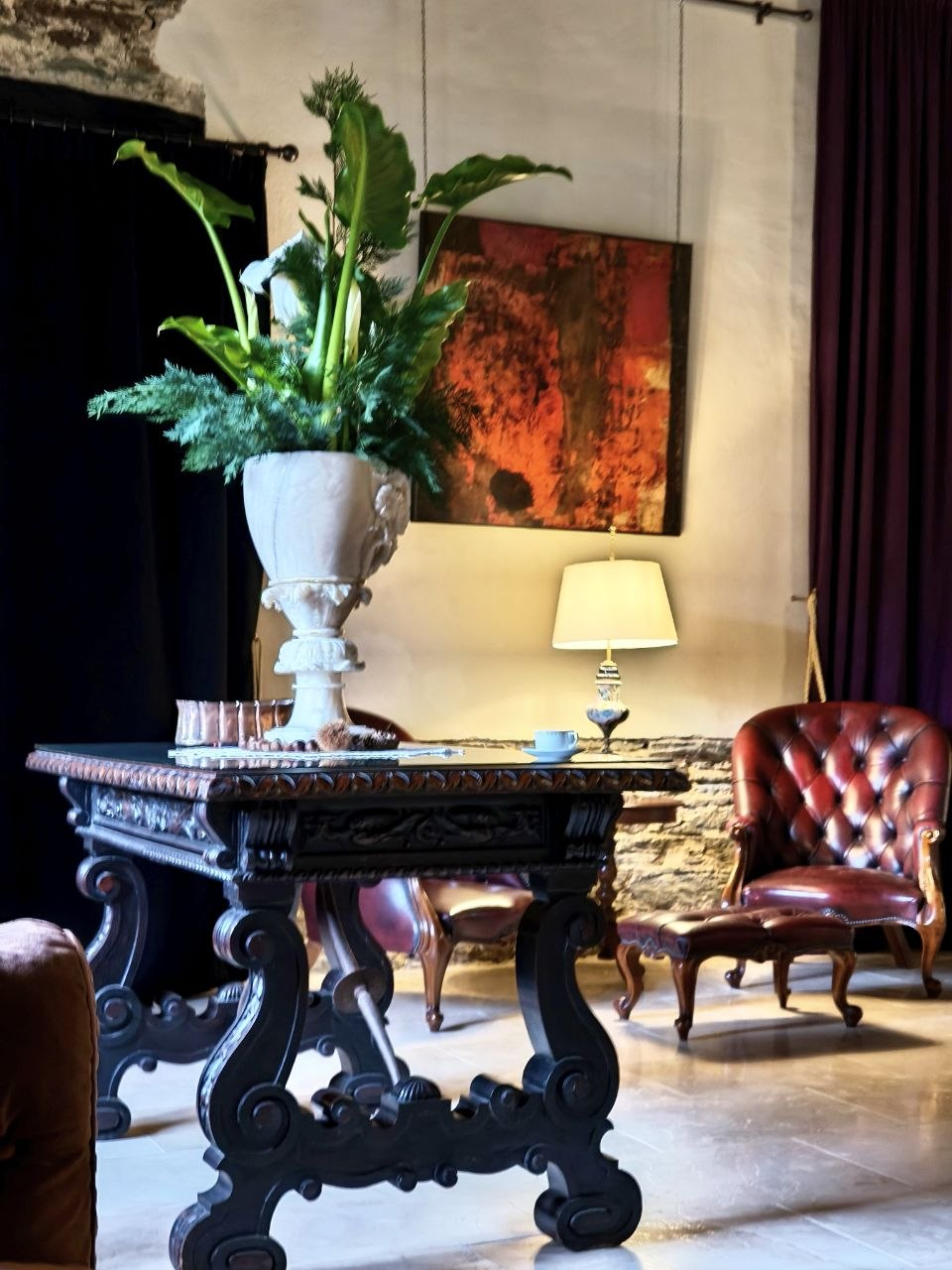
Mondoñedo adds another layer of distance without losing a clear sense of place. Turismo de Galicia identifies the town with the Camino del Norte and its historic and cultural heritage. For an international or dispersed team, that context can make the gathering memorable without competing with the work itself.
Explore a historic venue for a two-day corporate retreat in northern Spain, including its rooms, garden and event setting. For the overnight element, the boutique accommodation at Santa Emilia is inside the palacete.
Brief the venue around decisions, not décor
A productive first conversation with a venue starts with the retreat’s purpose and working method. Guest numbers matter, but so do the shape of the table, what needs to remain visible overnight, when the team must be alone, and how meals fit around the intellectual work.
Decision brief
State the central question, the required output and who has authority to decide.
Room brief
Specify table layout, presentation needs, wall space, privacy and accessibility.
Hospitality brief
Share arrival times, dietary requirements, meal rhythm and overnight needs.
Contingency brief
Agree what changes if the garden cannot be used and who makes that call.
- Send reading material before arrival and keep presentations short.
- Nominate one facilitator and one person to capture decisions.
- Keep the same working material available across both days.
- Plan at least one unscheduled pause after the most difficult discussion.
- Confirm bedrooms, meals, allergies, transport and accessibility in writing.
- Leave with a decision record, named owners and a review date.
Frequently asked questions
How many people should attend a corporate retreat?
The useful number depends on the decision. A leadership retreat is usually strongest when everyone in the room has a clear role in the choice or its implementation. Extra observers often make candour harder.
Why use two days instead of one?
Two days allow the team to separate evidence and debate from the final decision. The overnight pause gives people time to reconsider assumptions, while staying in one place protects continuity.
Should the evening include more facilitated work?
Usually not. Dinner can carry useful conversation, but it should not feel like a disguised session. Record any important insight and return to it during the structured morning readback.
What should we ask the venue before confirming?
Ask about exclusive or shared use, room layout, privacy, accommodation, meals, accessibility, technical needs, transport, garden alternatives and the process for confirming suppliers and timings.
Plan the retreat around the decision you need
Share your preferred dates, team size, overnight requirements and the result the gathering should produce. Santa Emilia can then confirm which spaces and rhythm may fit your brief.
Sources consulted
- Santa Emilia, event venue in Lugo, checked 23 October 2026.
- Santa Emilia, boutique accommodation, checked 23 October 2026.
- Turismo de Galicia, Mondoñedo cultural context, checked 23 October 2026.