

Santa Emilia · Mondoñedo, Galicia
Networking Event Venue: how to design a room for useful conversations
A networking event venue should be chosen for conversation, not simply capacity. The strongest room gives guests an easy arrival, several comfortable places to talk, intelligible sound, light-touch hospitality and a clear way to move from one introduction to the next.
At Santa Emilia, a 1924 palacete indiano in Mondoñedo, the Salón de los Pilares and adjoining reception areas offer a historic setting in which a host can design a more deliberate rhythm: welcome, introduce, circulate, pause and reconnect.
Invite people who have credible reasons to speak to one another.
Give every guest a first destination and a first human welcome.
Create small zones where speech remains comfortable and clear.
Make it easy to continue the useful introductions afterwards.
Begin with the conversation you want to make possible
“Networking” is too vague to serve as a brief. An investor reception, a professional association evening and a client gathering may all use that label, but the people, level of formality and desired outcomes are different. Before comparing venues, write one sentence that explains who should meet whom and why.
That sentence determines the guest list, host team and room plan. If specialists should exchange referrals, the event needs enough common ground for trust and enough variety for new value. If clients are meeting a wider team, hosts need a route for introductions that feels attentive rather than transactional.
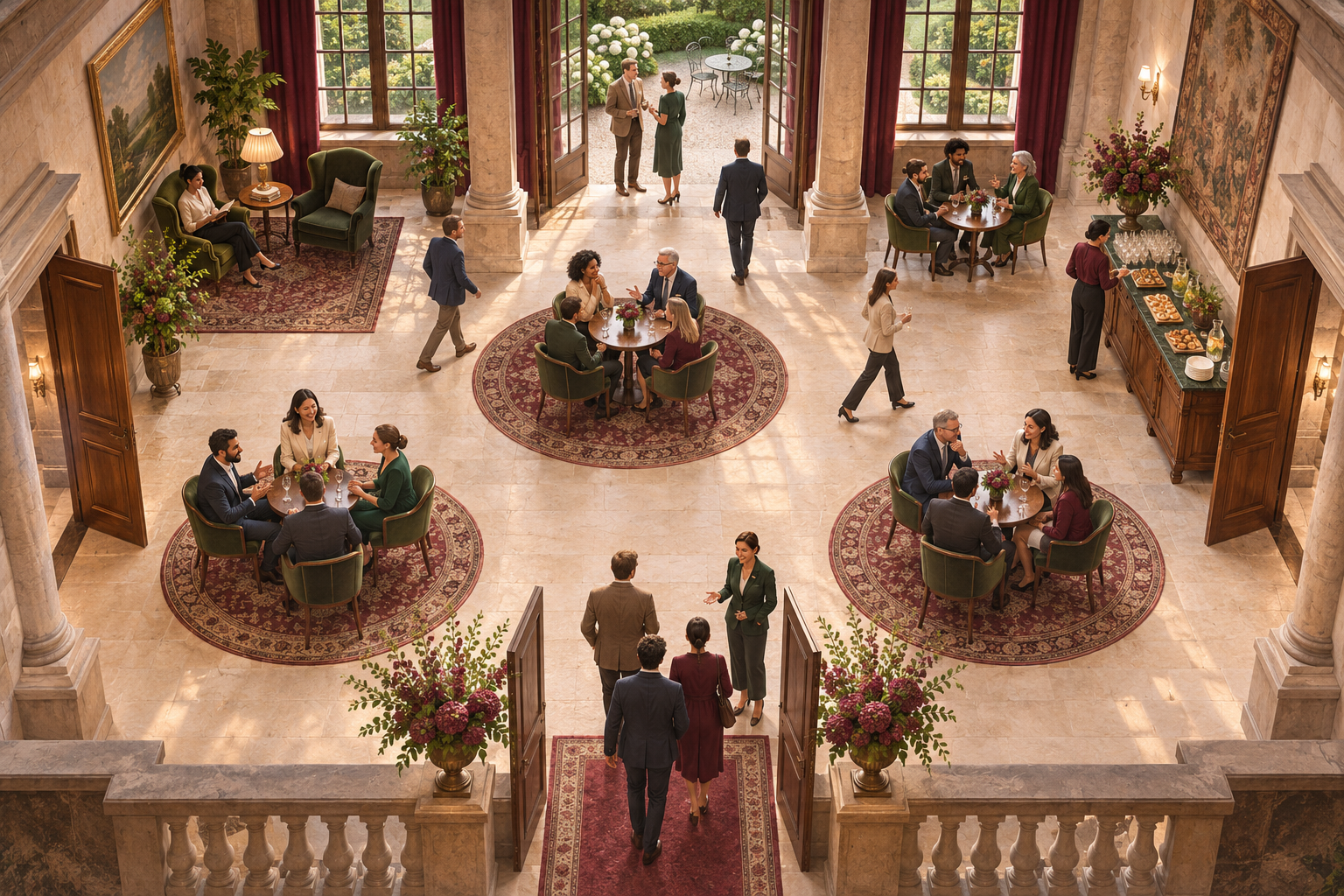
1 · Welcome edge
Registration, coats and the first introduction stay close to the entrance without blocking it.
2 · Conversation centre
Several small standing and seated clusters avoid one dominant crowd.
3 · Quiet margin
A calmer edge supports longer conversations and guests who need lower volume.
Good networking is not a room full of people. It is a room in which the right next conversation feels natural.
Design arrival before you design the programme
The first five minutes shape the evening. A guest who enters alone, cannot identify the host and immediately meets a congested registration table has to solve several small problems before speaking to anyone. A considered arrival removes those frictions.
Visible hosts
Position a recognisable host at the entrance and another just inside the room.
Useful name cues
Use readable names and organisations; avoid labels that reduce people to sales categories.
Prepared introductions
Give hosts a short list of connections worth making, with a truthful reason for each.
Late-arrival route
Keep the welcome functional after the opening so late guests are not left outside the flow.

Avoid scripting personal familiarity that does not exist. A simple introduction works: name each person, state the relevant shared interest and then let them take over. The host can return later if the conversation needs another connection.
Protect speech, circulation and pauses
Sound matters because networking depends on repeated, low-effort speech. Music can establish atmosphere, but it should not force guests to lean in or repeat themselves. Any welcome remarks need a clear focal point and a sound check performed with the room set as it will be used. Shure’s meetings guide is a useful reminder that intelligibility depends on the whole signal path and the acoustic environment, not just the presence of a microphone.
Circulation matters for the same reason. Place service points away from the narrowest route and avoid one spectacular table that attracts everyone to the same spot. A mixture of standing positions, chairs at the edge and open routes through the centre helps conversations form and dissolve without embarrassment.
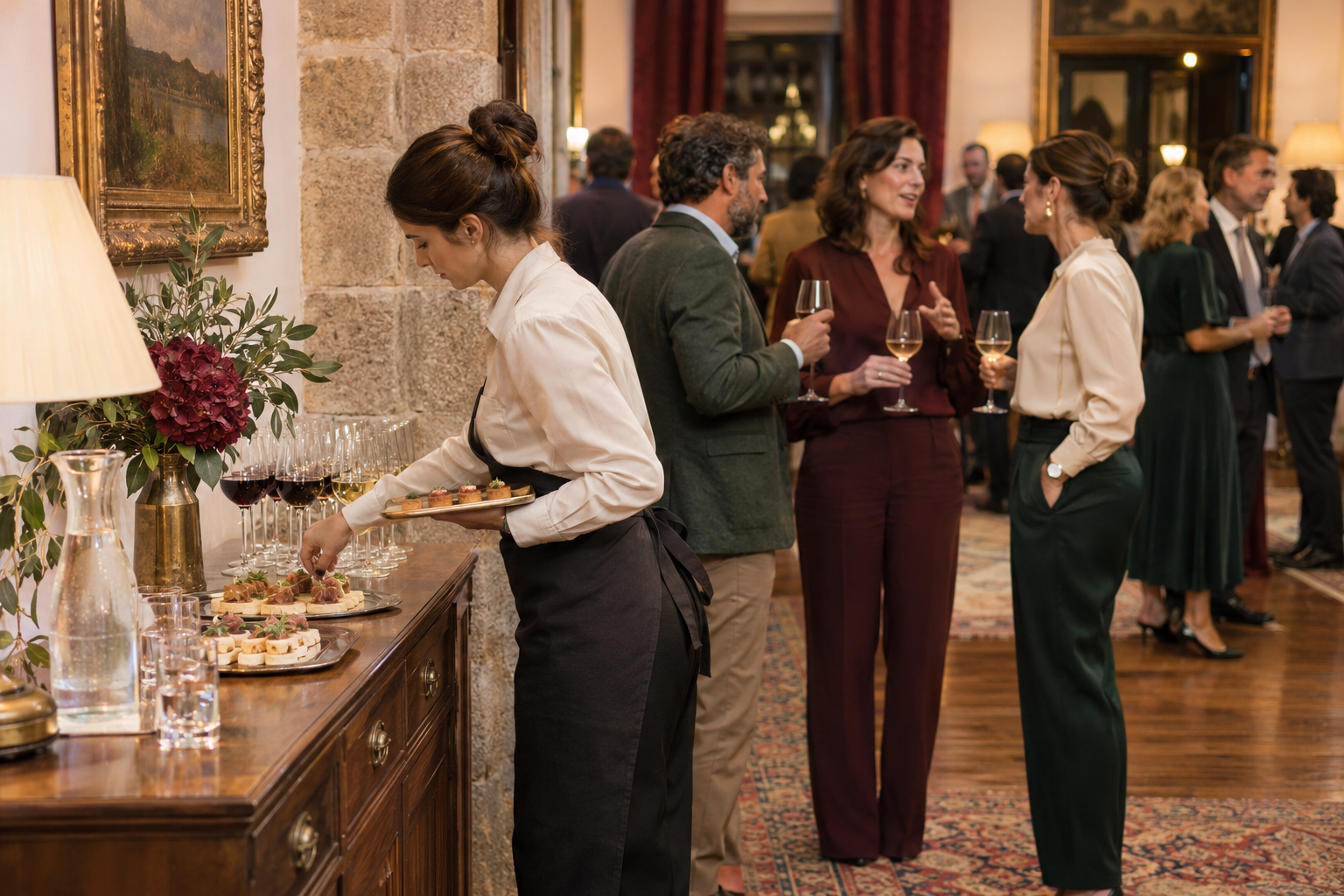
Food should be easy to hold and easy to leave. If every plate needs two hands, the event has accidentally designed against handshakes, note-taking and movement. Water should be obvious and continuously available; dietary needs should be confirmed early and handled without making a guest explain them publicly.
Use a light programme, not a continuous one
Guests need a reason to arrive together, but they do not need an evening of speeches. A short welcome can establish purpose and etiquette. One facilitated prompt or carefully chosen introduction can then reset the room midway through the event.
Hosts receive guests and make the first prepared introductions.
A concise welcome explains why this group has been brought together and how the room will work.
Hosts circulate, notice isolated guests and create only the introductions that have a credible basis.
A brief prompt invites guests to meet someone beyond their first cluster.
Service continues while the room settles into fewer, longer conversations.
Thank guests, explain follow-up and leave enough time to finish conversations gracefully.
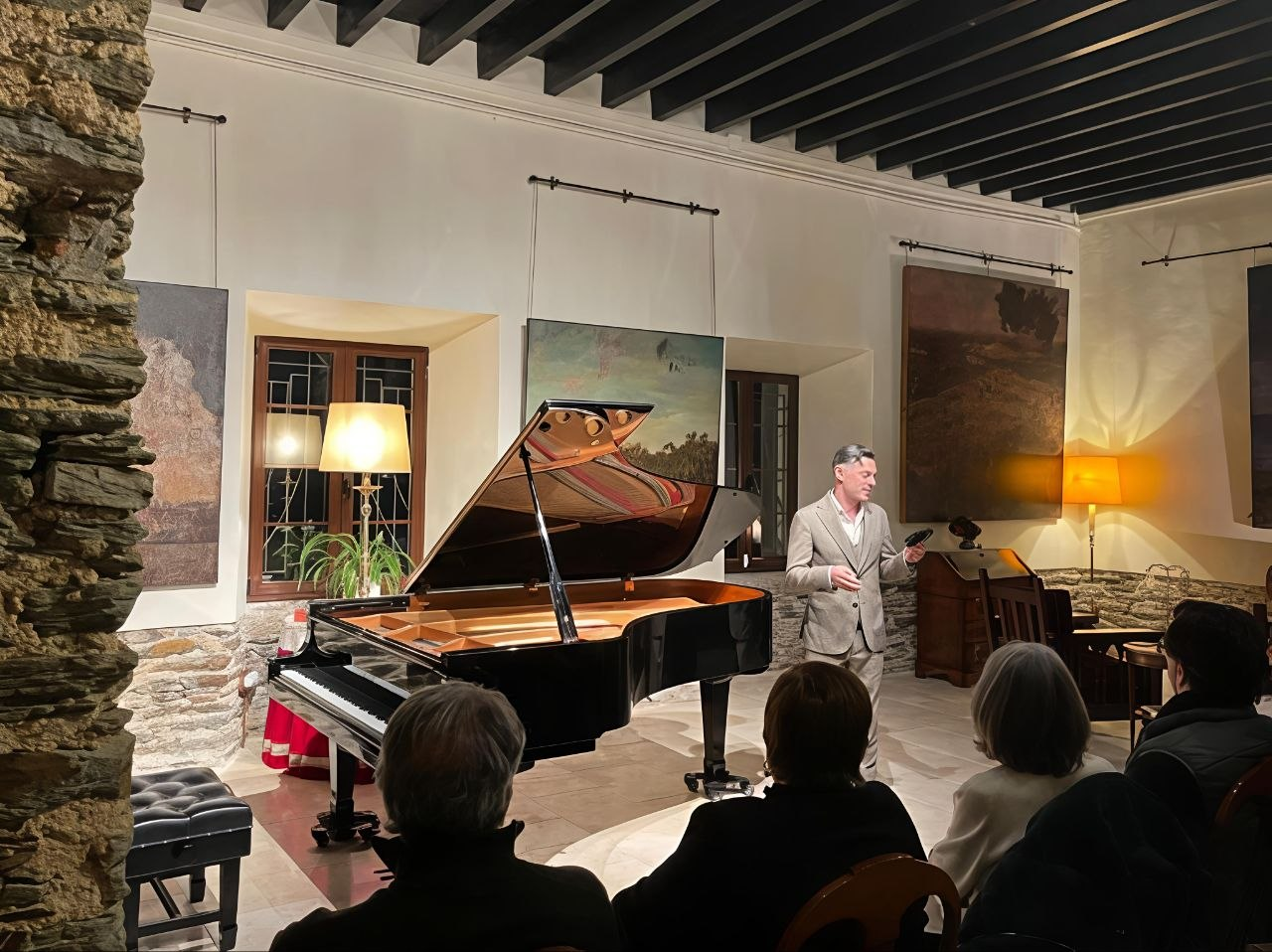
Santa Emilia’s official venue information presents the Salón de los Pilares, historic reception rooms and garden within a 1924 palacete indiano in Mondoñedo. The photograph above shows the room in use for a small cultural gathering. For a networking brief, the relevant question is not whether a room looks impressive when empty, but how it supports welcome, sightlines, speech and movement when occupied.
Explore a historic event venue in Lugo and consider how its rooms could be assigned to arrival, conversation and quieter exchange.
A venue brief for a useful networking evening
- State the guest mix and the practical outcome you want.
- Share arrival waves, registration needs and accessibility requirements.
- Ask for a room plan that shows furniture, service points and circulation.
- Confirm music level, welcome-speech sound and the location of quieter areas.
- Provide dietary information and agree how allergens will be communicated.
- Decide who makes introductions and what information they may appropriately use.
- Plan how guests can consent to exchanging details or joining follow-up communication.
- Set a clear finish time and a graceful way to signal it.
Frequently asked questions
What is the best layout for a networking event?
Use several small conversation zones linked by obvious circulation. Combine standing points with seating at the edges, keep the entrance clear and separate service from the busiest route.
How long should a networking reception last?
For many professional gatherings, 75 to 100 minutes is enough for arrival, a short welcome and two or three meaningful conversations. The right length depends on travel, guest mix and whether a meal is included.
Should a networking event have assigned introductions?
Yes, selectively. Hosts should prepare a small number of well-founded introductions and explain the shared relevance. Forced rotations can create activity without producing useful exchange.
What should we ask a venue before booking?
Ask about room layouts, acoustics, sound, accessibility, coat storage, service routes, dietary handling, privacy, garden alternatives, finish times and who will coordinate the event on site.
Plan a room around the people you are bringing together
Share your preferred date, guest profile, expected numbers and the conversations the event should enable. Santa Emilia can then advise which spaces may fit the brief.
Sources consulted
- Santa Emilia, event venue in Lugo, checked 3 November 2026.
- Santa Emilia, history of the palacete, checked 3 November 2026.
- Turismo de Galicia, Vila de Mondoñedo, checked 3 November 2026.
- Shure, Audio Systems Guide for Meetings and Conferences, checked 3 November 2026.