
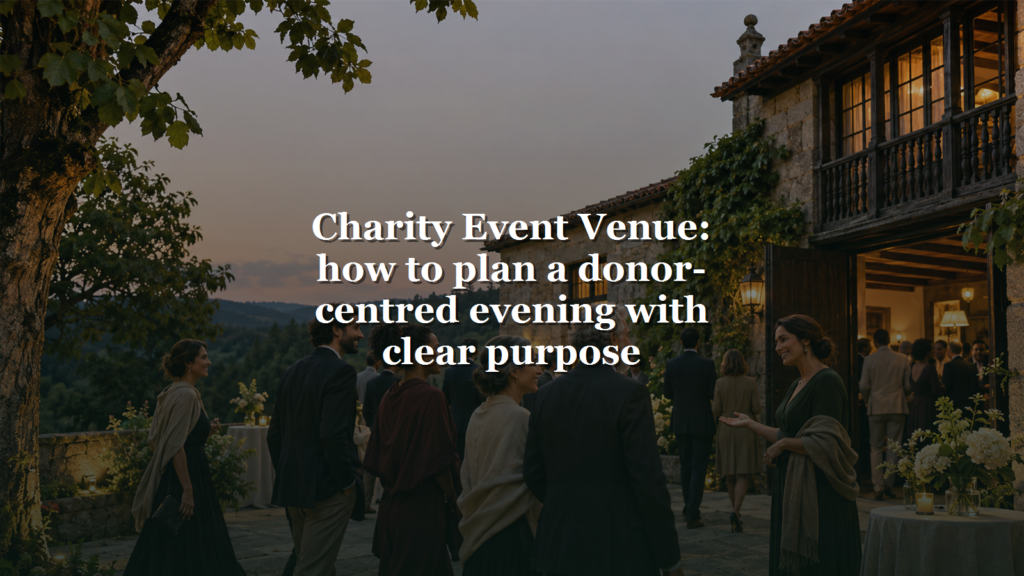
Santa Emilia · Mondoñedo, Galicia
Charity Event Venue: how to plan a donor-centred evening with clear purpose
A charity event venue should help guests understand the cause, participate with dignity and take a clear next step. Choose a place for its guest journey, accessibility, acoustics, privacy and operational discipline—not for appearance alone.
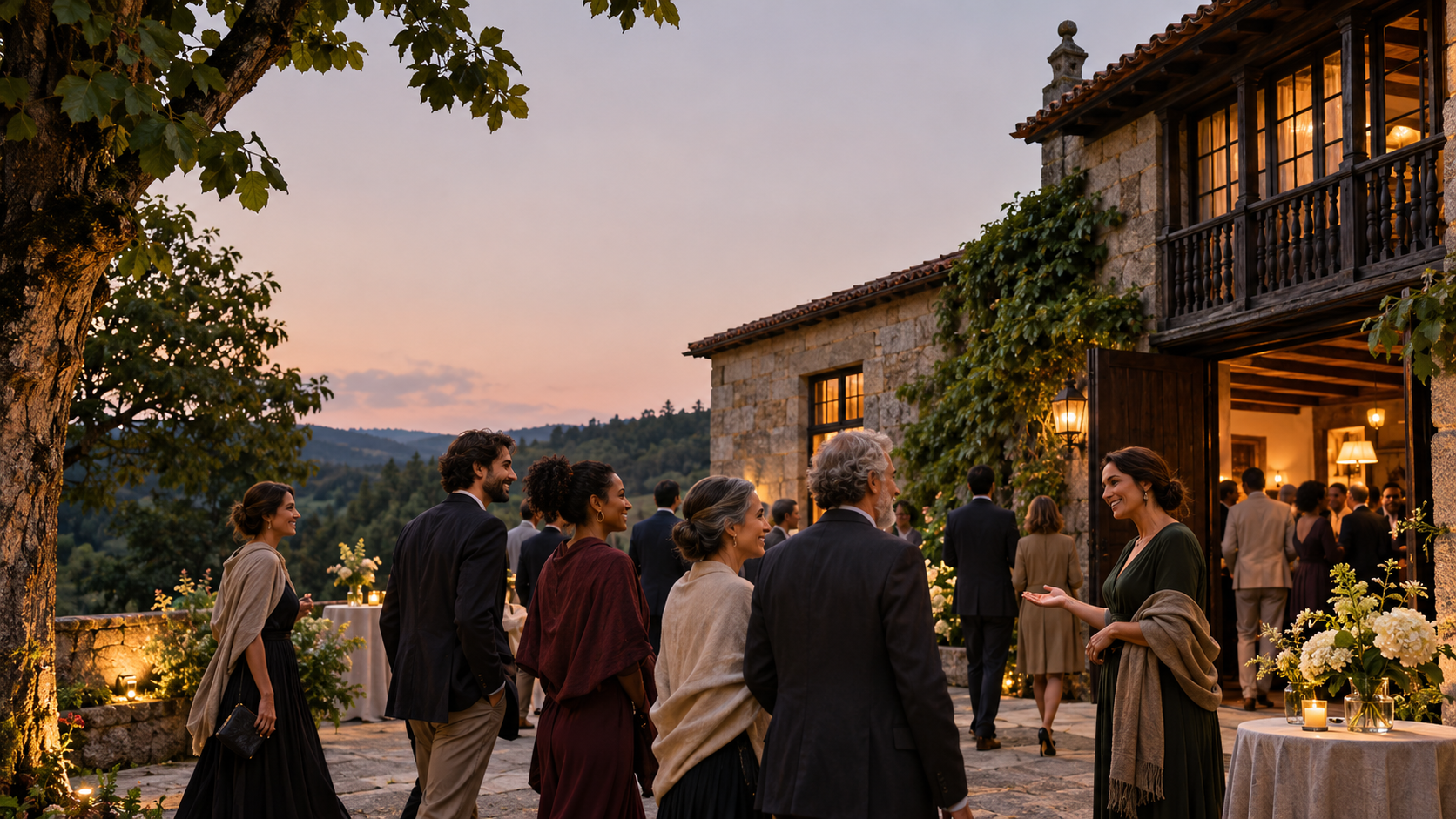
At Santa Emilia, a 1924 palacete indiano in Mondoñedo, the Salón de los Pilares, reception rooms, garden and boutique accommodation allow an organiser to separate welcome, storytelling, dining, giving and quieter conversation within one historic setting.
Every part of the evening should support one truthful, specific objective.
Guests need more than a seat: give them a humane way to engage.
Explain how funds, data and follow-up will be handled.
The relationship continues after the room has emptied.
Start with the change, not the dinner
Before comparing rooms, write a one-sentence event objective. “Raise money” is not precise enough. A useful brief identifies the programme or community the evening will support, the audience you need in the room and the action guests should feel able to take.
That objective disciplines the guest list and the budget. A cultivation evening for prospective major donors is different from a community fundraiser, a sponsor reception or a volunteer celebration. Each requires a different balance of explanation, hospitality, evidence and asking.
Recognise the guest, explain the room and remove practical friction.
Show the need, the work and the people involved without exaggeration.
Offer a clear, voluntary way to give, pledge, introduce or support.
Thank, report and follow up in the manner the guest agreed to.
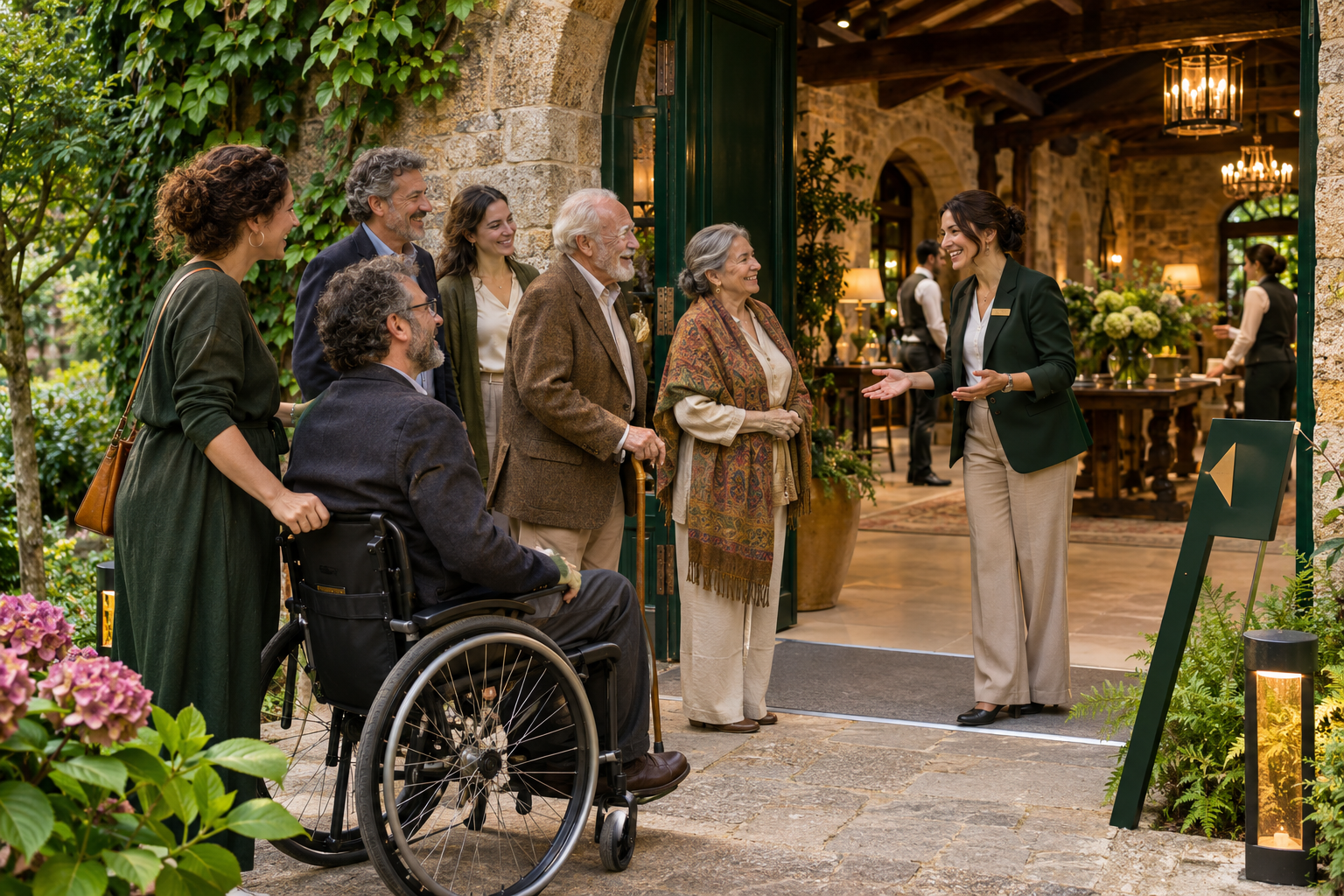
Accessibility belongs in the first site visit, not the final checklist. Ask how a guest reaches the entrance, circulates between rooms, uses the facilities, hears the programme, finds a quieter place and leaves safely. Discuss dietary and communication requirements through a discreet process before the event.
A donor-centred evening does not treat generosity as the finale. It builds understanding, agency and trust from the first welcome.
Give each room one job
A beautiful venue can still fail if registration, drinks, speeches, payment and staff circulation all compete in the same narrow area. Walk through the evening from the guest’s point of view and assign each space a clear function.
Arrival
A visible host, coat route and uncomplicated check-in keep the entrance calm.
Connection
Small standing and seated groups support conversation before the formal programme.
Story
A short focal moment needs clear sightlines, intelligible sound and no service noise.
Action
Donation and pledge routes should be private, optional, tested and easy to explain.
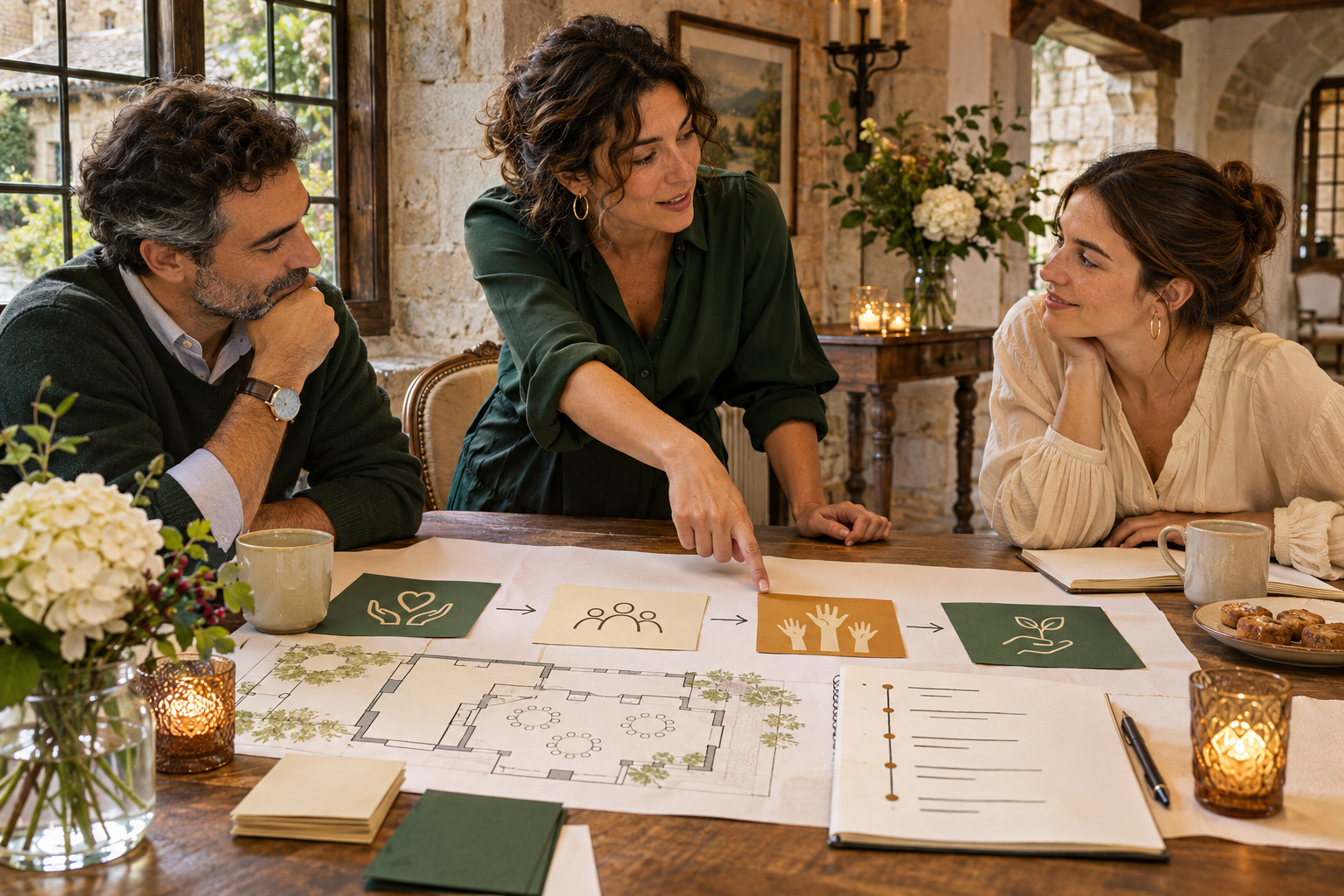
Keep the programme short enough for genuine exchange. If guests spend the entire evening facing a stage, the event loses the conversations through which questions are answered and confidence is built. A strong venue plan creates a focal point when one is needed, then lets the room breathe again.
Make the giving moment clear and unforced
The ask should connect a specific need to a credible response. State what support will make possible, who is responsible for the work and how progress will be reported. Avoid inflated urgency, vague promises or the suggestion that every guest is expected to give publicly.
Offer more than one route where appropriate: a tested digital payment option, a private pledge conversation or a way to request information later. Staff and volunteers should know who can answer questions, what they may say and how to protect a guest’s privacy.
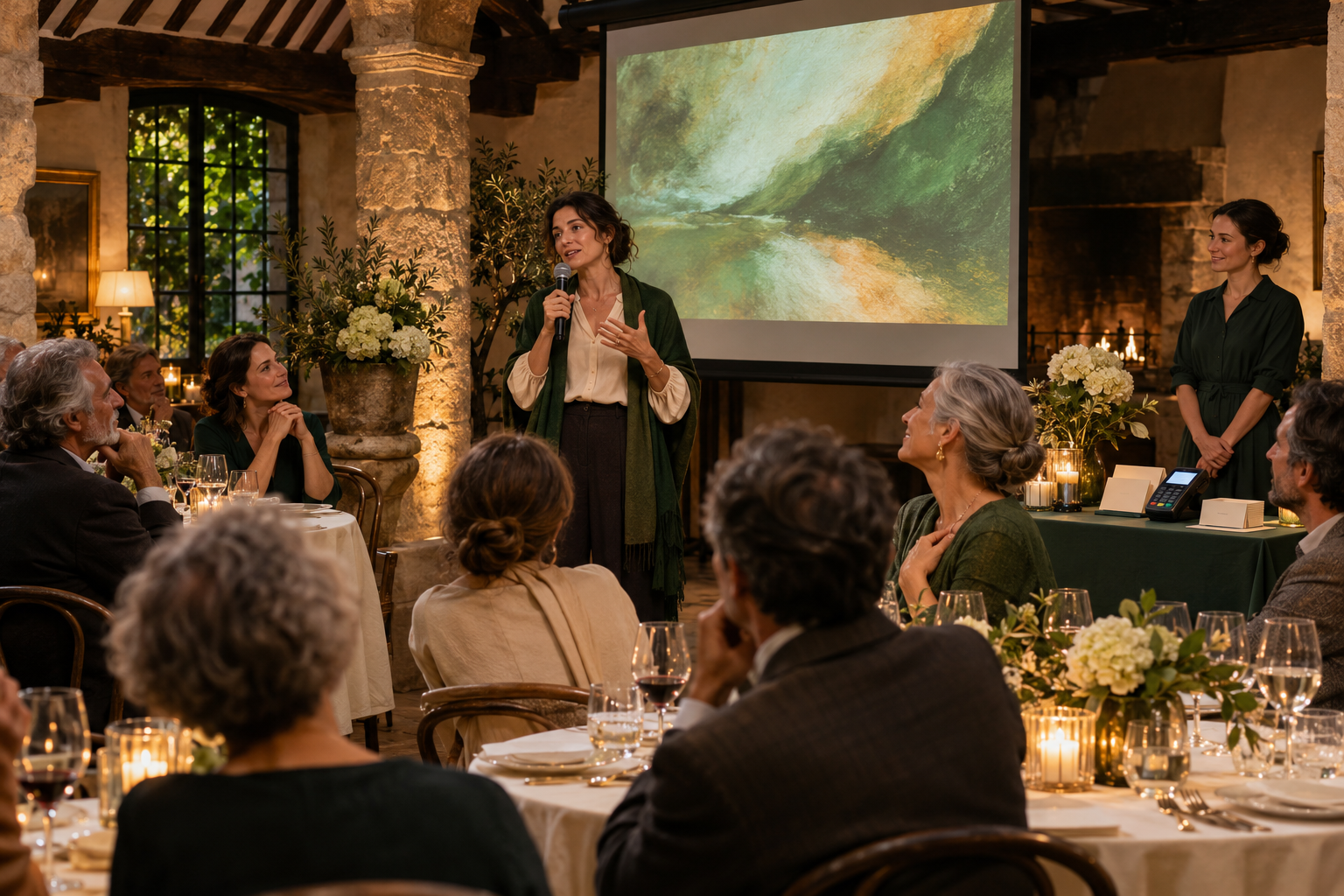
Plan the transition out of the ask. Music, service or a short pause can return the room to conversation without making anyone’s decision visible. The event is not a test of social pressure; it is an opportunity to make informed generosity possible.
Build trust through governance and written responsibilities
The Fundraising Regulator recommends a written risk assessment and written agreements with venues and third parties, with responsibilities and insurance made clear. Its guidance also advises professional input for events outside the UK. For an event in Spain, organisers should confirm applicable Spanish and local requirements and any rules imposed by their own charity regulator or governing documents.
Trustees and senior organisers should be able to explain the intended impact, budget, resource commitment and principal risks. If money is raised for a stated purpose, the event, payment copy and follow-up should all use language that is consistent with that purpose. Donor information should be collected only through an agreed process and retained according to the organisation’s data policy.
Confirm purpose, decision authority, budget, capacity, accessibility, licences, insurance and cancellation terms.
Agree guest data sources, privacy language, dietary handling, photography consent and the event’s truthful claim.
Test the arrival, sound, payment routes, lighting, evacuation roles and incident contacts.
Reconcile funds, record incidents, thank guests, honour communication choices and report against the stated purpose.
How a historic Galician house can support the brief
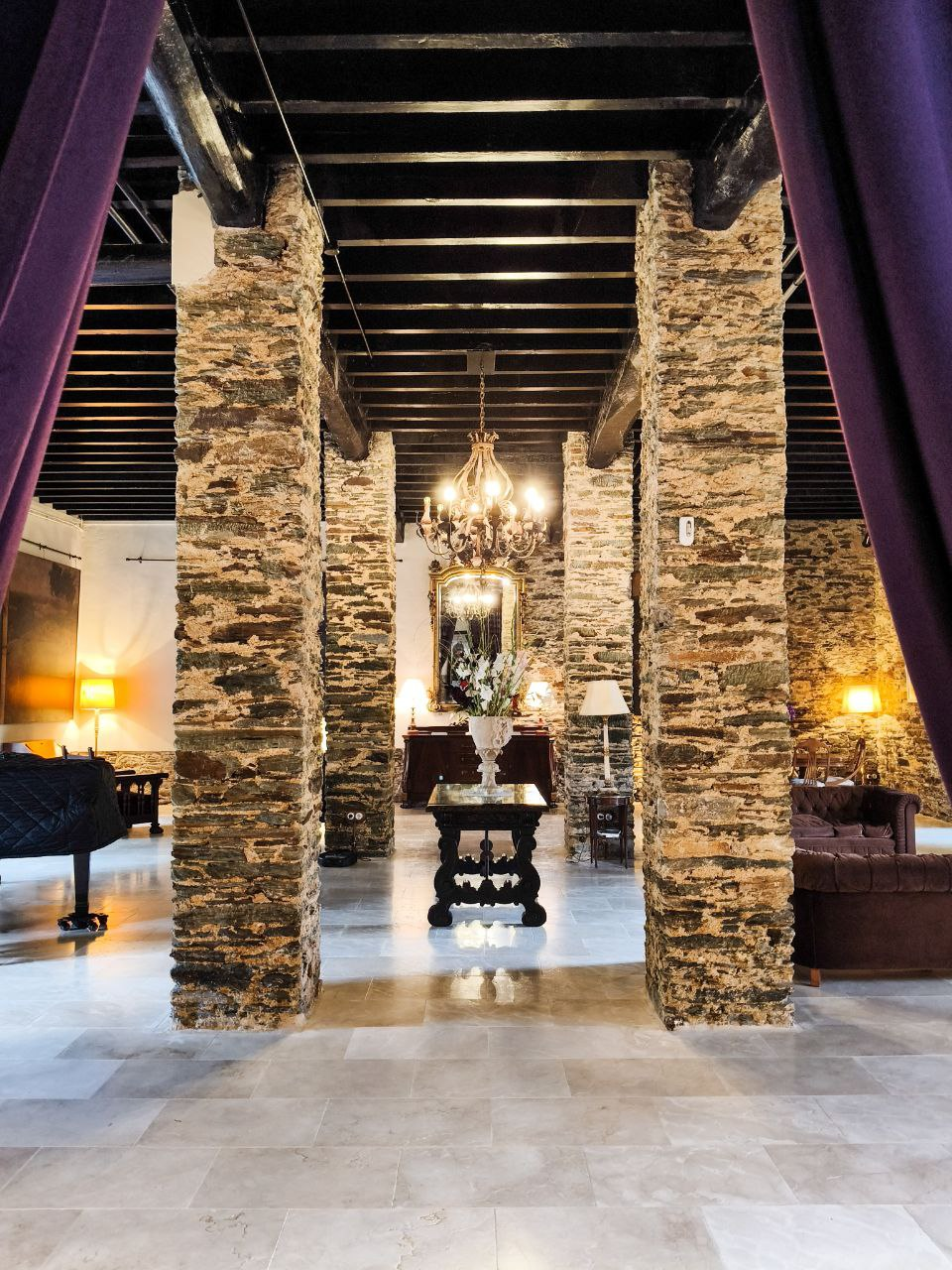
Santa Emilia’s official venue information describes a 1924 palacete indiano in Mondoñedo with the Salón de los Pilares, noble reception rooms, a garden and boutique accommodation. Those elements can support a charity evening with distinct phases: arrival outside or in a reception room, a focused programme in the principal salon, dining, and quieter stewardship conversations afterwards.
The relevant question is not whether the house is memorable—it is how each part can serve the organisation’s purpose and guest requirements. Share the event objective, expected numbers, timing, accessibility needs, technical plan and catering brief before requesting a layout.
Explore a historic venue for a purpose-led charity event in Galicia and ask which spaces fit the journey you have designed.
Charity event venue checklist
- Write one event objective and one intended guest action.
- Confirm decision authority, budget ownership and the named event lead.
- Complete a written risk assessment and agree responsibilities with the venue and suppliers.
- Check accessibility from arrival through departure, including quieter space and facilities.
- Test sound, lighting, presentation and every donation route in the final room layout.
- Document how dietary information, guest data and photography choices will be handled.
- Make the fundraising purpose and use of funds clear in invitations, speeches and payment copy.
- Prepare acknowledgement, reporting and donor follow-up before the first guest arrives.
Frequently asked questions
What should a charity look for in an event venue?
Look for a coherent guest journey, step-free or otherwise suitable access, clear acoustics, private and public conversation areas, tested payment connectivity, realistic service routes and a venue team willing to document responsibilities.
How long should a charity fundraising evening last?
There is no universal length. Many donor evenings work best when the formal programme is concise and the schedule preserves time for welcome, questions and stewardship. Design backwards from the guest action and travel needs.
Should the donation ask happen during dinner?
It can, but service noise and attention should be paused. The ask should be easy to hear, specific, voluntary and followed by a discreet action route rather than public pressure.
What information should we send a venue?
Send the purpose, guest profile, expected numbers, schedule, accessibility requirements, food and drink plan, technical needs, donation process, data and photography policy, insurance position and named decision-maker.
Plan a charity evening around purpose and trust
Share your preferred date, guest profile, expected numbers, accessibility needs and fundraising objective. Santa Emilia can then advise which rooms may suit the brief.
Sources consulted
- Fundraising Regulator, Fundraising events, updated 3 November 2026 and checked 7 November 2026.
- Charity Commission for England and Wales, Charities and fundraising, updated 3 February 2026 and checked 7 November 2026.
- Santa Emilia, event venue in Lugo, checked 7 November 2026.
- Santa Emilia, history of the palacete, checked 7 November 2026.