
Santa Emilia · Mondoñedo, Galicia
Business Meeting Venue Spain: a focused working day for international teams
A business meeting venue in Spain should be chosen around the decisions the group must make, not guest numbers alone. For an international team, the useful brief covers room layout, privacy, hybrid participation, travel windows, food, breaks and the written record that will leave with the delegates.
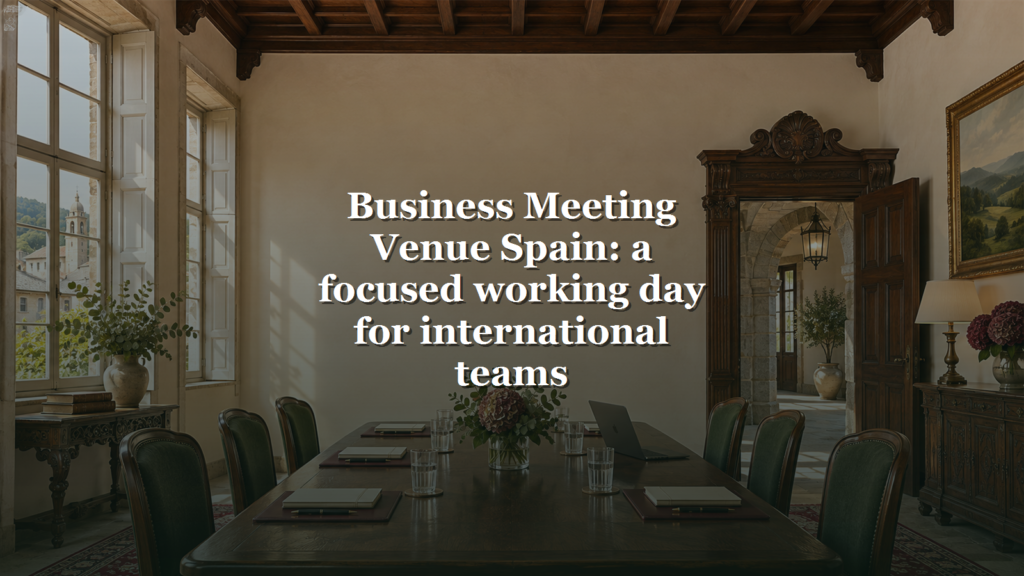
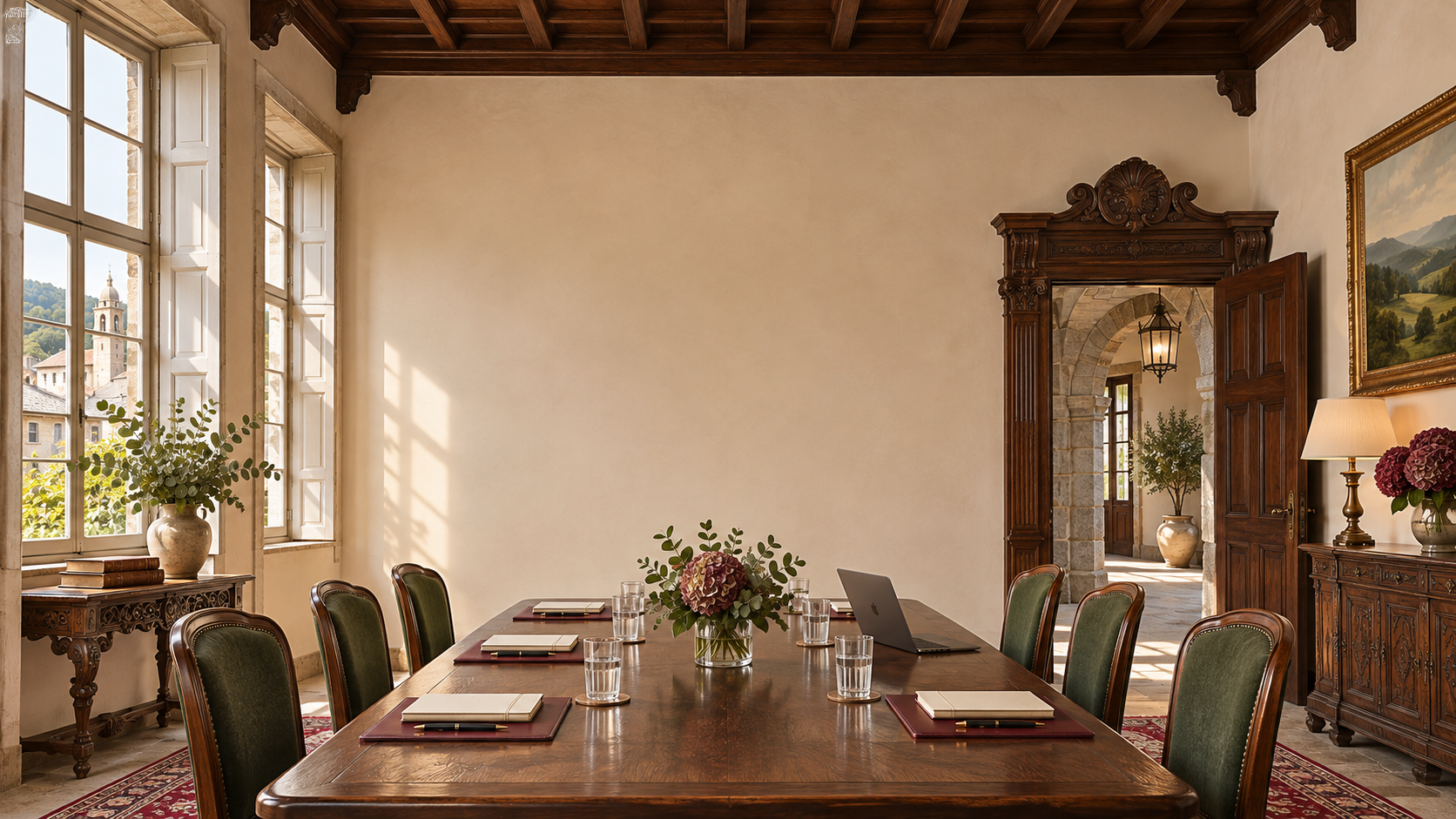
Santa Emilia is a historic house in Mondoñedo, Galicia, with event rooms and a garden in the centre of the town. It suits a focused working day when organisers want one coherent setting for formal discussion, quieter conversations and hospitality, subject to written confirmation of the exact technical and access requirements.
Name the decisions and documents the meeting must produce.
Design the room so on-site and remote voices can contribute.
Keep routine updates outside the agenda and preserve real breaks.
End with owners, dates and a shared decision record.
Choose a meeting venue, not merely an event space
A broad corporate event may be built for presentations, circulation and production. A working meeting has a narrower purpose: a defined group must examine evidence, disagree constructively and leave with an agreed next step. That distinction changes the venue brief.
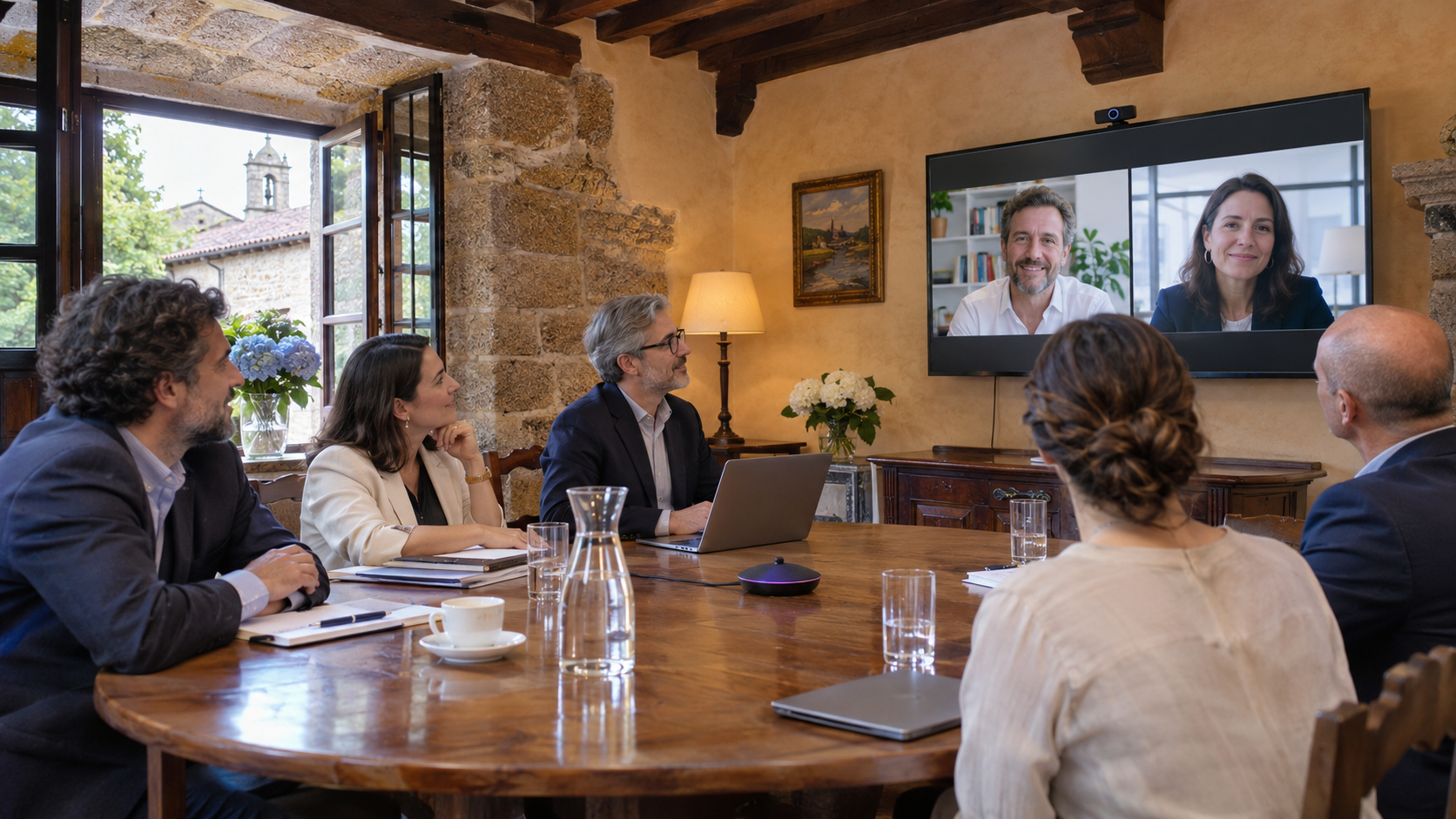
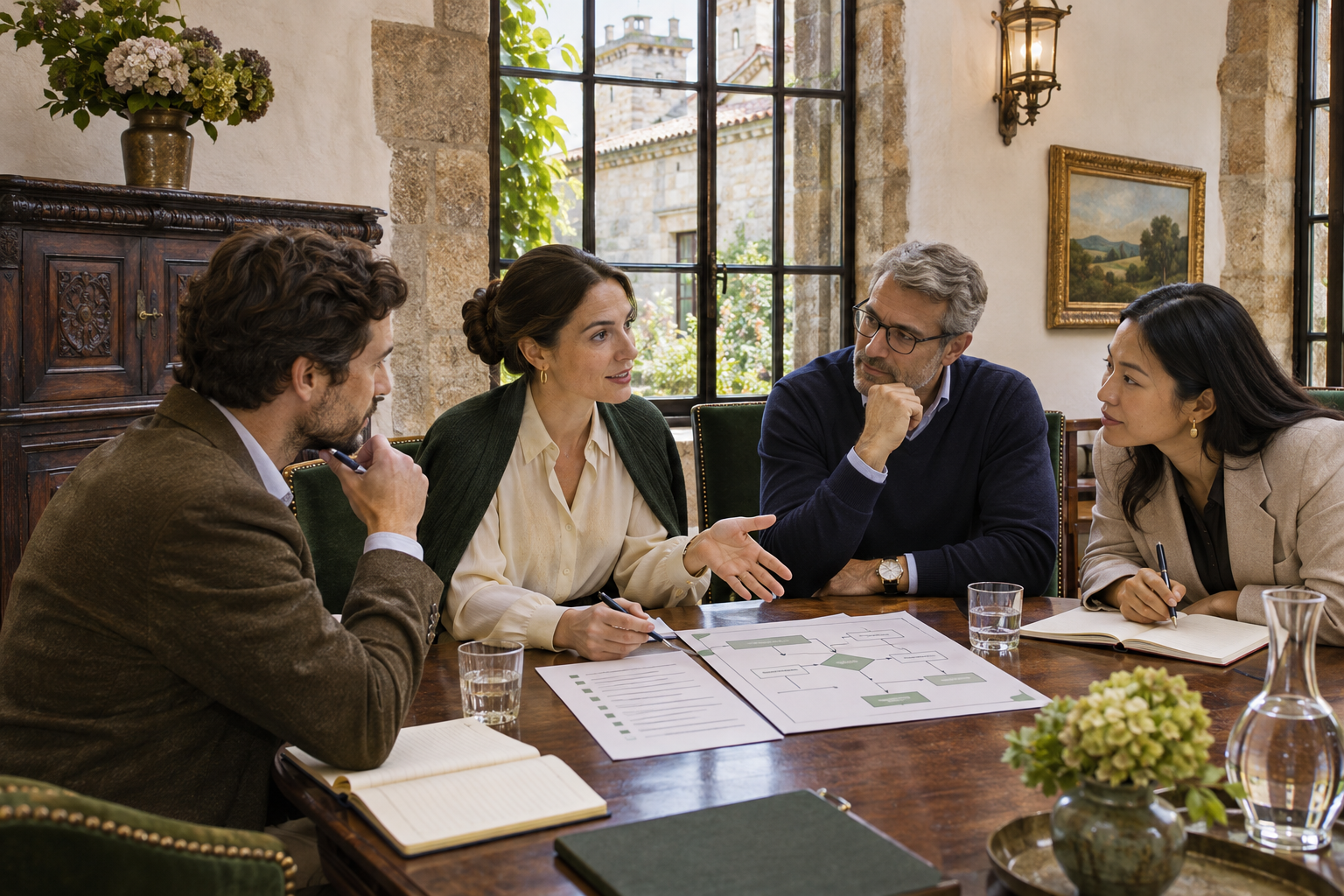
The main table should give every participant a clear view of the speaker and any shared screen. The room needs enough privacy for candid discussion. Food and breaks should protect concentration rather than turn the day into a sequence of transfers. If some delegates join remotely, sound and sight lines matter as much as the furniture.
| Venue question | Why it matters | What to confirm |
|---|---|---|
| What must be decided? | The outcome determines the room, agenda and participant list. | Decision authority, required papers and the final record. |
| Who joins remotely? | Hybrid delegates can be sidelined by poor audio or an invisible working surface. | Connection method, microphones, camera position, screen and backup. |
| How confidential is the discussion? | Serious work suffers when people anticipate interruptions or overhearing. | Room access, adjacent uses, document handling and call privacy. |
| When must delegates travel? | Late arrivals and early departures can remove decision-makers from key items. | Arrival window, luggage, transfers, meal timing and departure buffer. |
The best venue brief begins with the decision, then works backwards through people, room, technology and time.
Build the working day around a decision sequence
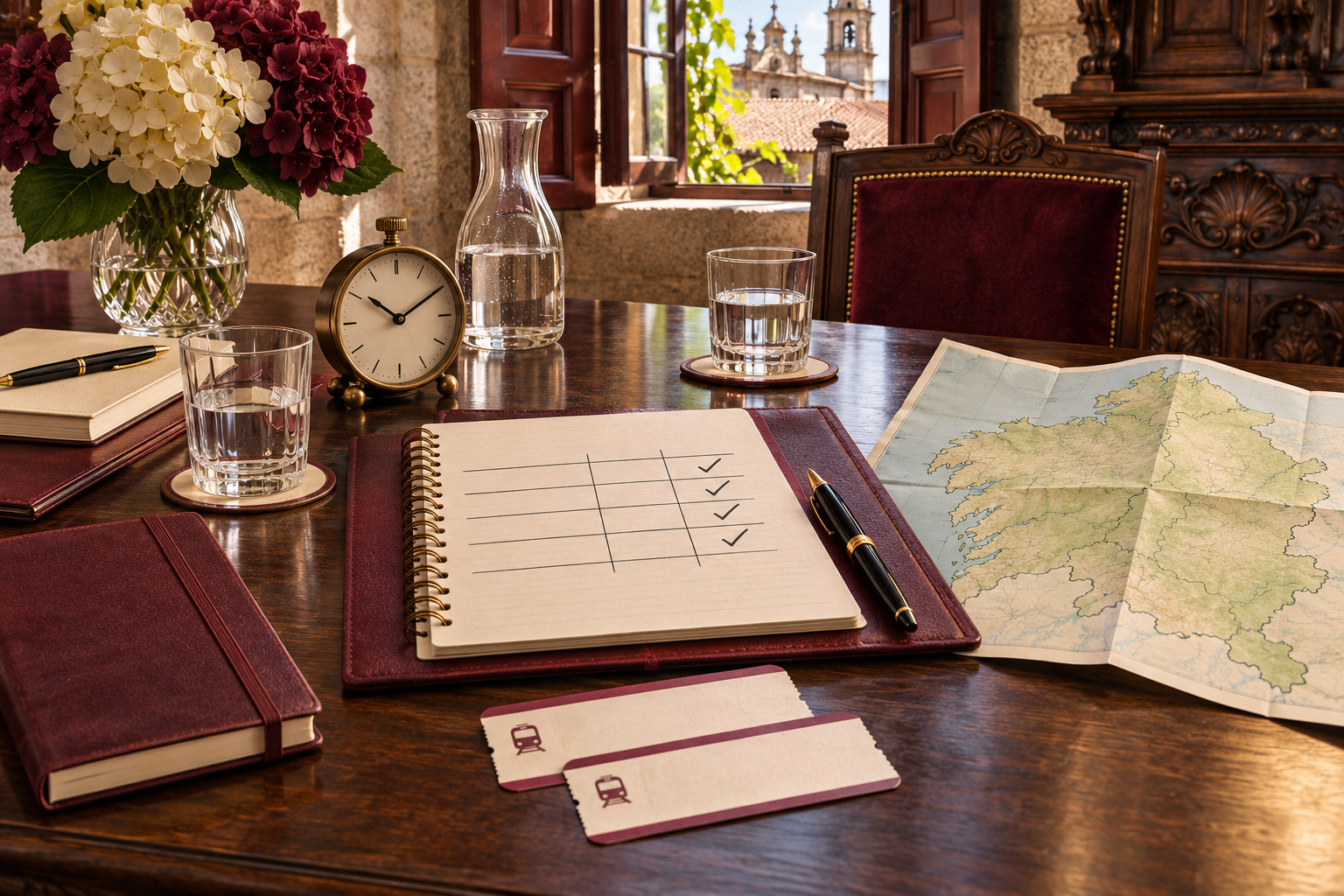
A useful agenda separates information, interpretation and choice. Share routine papers in advance. Use the morning to establish the same evidence base, the central part of the day to test options, and the final session to record decisions and ownership.
Open the room before the formal start, test every remote connection and confirm that the decision-maker is present.
State what is in scope, what is not, which evidence is agreed and what must be resolved before departure.
Compare a small number of credible choices. Keep assumptions, costs, risks and dependencies visible to everyone.
Protect a real pause. Informal conversation may reveal uncertainty, but do not force another presentation over the meal.
Select the preferred direction, invite a final challenge and make the trade-offs explicit.
Read back the decision, responsibilities, dates, unresolved questions and the first review point.
Make hybrid participation part of the room plan
UK government guidance for hybrid meetings recommends testing the technology and matching the equipment to the room. It identifies a stable connection, camera, microphone and shared display among the practical requirements. The important principle is simple: remote delegates must be able to hear, see and contribute to the same discussion.
Ask where the camera will sit, how the remote participant will see working documents, who monitors the call and what happens if the connection fails. A separate online facilitator can be useful when the agenda is complex. For a confidential meeting, also confirm how links, recordings, shared files and participant access will be managed.
Audio first
Test voices from every seat and avoid relying on one distant laptop microphone.
Shared view
Put documents and decisions on a surface that both groups can read.
Named support
Assign one person to watch the call, chat and technical status.
Backup route
Agree a dial-in or all-remote alternative before the meeting begins.
What a historic house can add to a working meeting
A change of setting is useful when it changes behaviour. A smaller historic house can give an international group a stronger sense of occasion than an ordinary office, while keeping the working day at a human scale. The aim is not decoration for its own sake; it is a setting that supports attention, hospitality and conversation.
Santa Emilia is at Bispo Fernández de Castro 11 in Mondoñedo, in the province of Lugo. Its venue pages describe the Salón de los Pilares, other reception rooms and a garden. Turismo de Galicia presents Mondoñedo as a historic centre in northern Galicia, giving visiting delegates a clear local context rather than an anonymous meeting address.
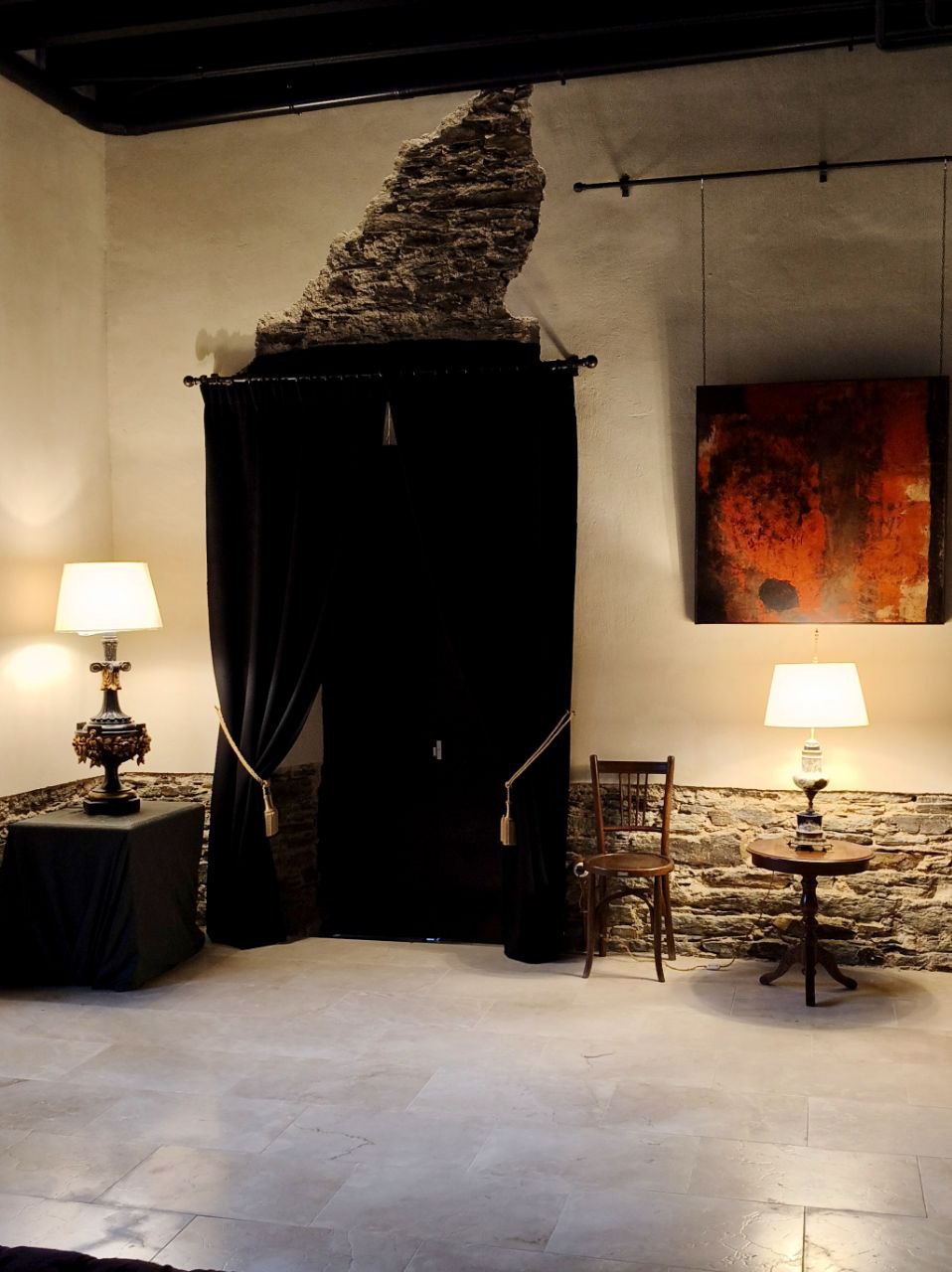
Explore the official page for a salón for corporate events in Lugo. It is the right place to review the setting before asking Santa Emilia to confirm availability, room choice and an operational plan for your meeting.
Send a brief the venue can answer precisely
Do not ask only for a room and a price. Give the venue enough information to confirm whether the day can work as designed. A written brief also makes it easier to compare options without confusing atmosphere with operational fit.
- Preferred date, start time, finish time and flexibility.
- Number of on-site and remote participants.
- Decision purpose, agenda format and room-layout preference.
- Screen, camera, microphone, power and connection requirements.
- Privacy, document-handling and recording restrictions.
- Access requirements and any reasonable adjustments.
- Arrival routes, transfer plan, luggage and departure deadlines.
- Meals, allergies, breaks and whether smaller conversations need another room.
- Weather alternative if any garden time is planned.
- Name of the organiser authorised to approve changes on the day.
Frequently asked questions
How is a business meeting different from a corporate retreat?
A business meeting normally concentrates a defined decision into one working day. A retreat usually adds a longer residential rhythm, reflection time and broader team or strategy development.
What should international organisers confirm first?
Confirm the decision-makers, arrival and departure windows, language needs, hybrid participants, privacy level and required output before discussing room styling.
Can the article confirm Santa Emilia’s technical equipment?
No. Equipment, connectivity, accessibility and operational availability must be confirmed directly for the proposed date and meeting format.
What should the written meeting record contain?
Record the decision, the reasoning that matters, named owners, deadlines, unresolved questions and the date of the first review.
Turn your meeting plan into a venue brief
Share your dates, delegate numbers, travel windows, hybrid requirements and the decision the day must produce. Santa Emilia can then confirm whether its rooms and hospitality fit the brief.
Sources consulted
- Santa Emilia, Salón de Eventos en Lugo, checked 18 November 2026.
- Santa Emilia, event rooms and garden, checked 18 November 2026.
- UK Planning Inspectorate, virtual and hybrid event guidance, checked 18 November 2026.
- UK Charity Commission, meetings guidance, checked 18 November 2026.
- Turismo de Galicia, Mondoñedo: un paseo de historia e vida, checked 18 November 2026.
- AENOR, sustainability management for events, checked 18 November 2026.